
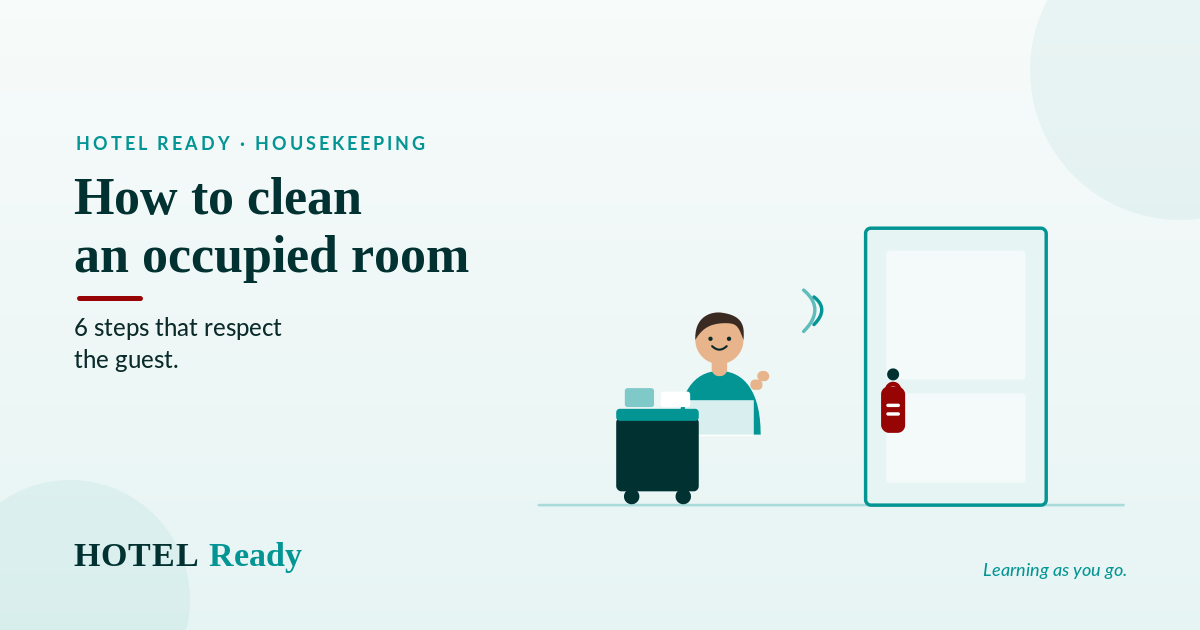
You knock, call out "Housekeeping," wait a beat, and start to open the door — and there's the guest, sitting on the bed in their dressing gown. In the next three seconds, they decide whether you're a professional or an intrusion.
Housekeeping is the most intimate job in the hotel. You move through the space where guests sleep, undress, and let their guard down. Most of the time the room is empty and the work is quiet. But sooner or later you'll open a door and the guest will be right there — and how you handle that moment says more about your hotel's standards than a spotless bathroom ever could.
I've trained a lot of housekeepers, and the ones guests remember warmly aren't the fastest. They're the ones who make a guest in their own room feel respected, not invaded. That's a skill, and it has a shape.
Why this moment carries so much weight
A guest's room is their private space, even though it's yours to clean. When you enter well — announced, unhurried, discreet — you reinforce that they're safe and looked after. When you enter badly — barging in, ignoring the "Do Not Disturb," rummaging near their things — you break the one thing a hotel sells above all else: the feeling of being at ease.
The whole art here is respect for personal space. Everything below is just what respect looks like in practice.
The six steps of entering an occupied room well
1. Signal, always
Knock softly or ring the bell, then wait about ten seconds and knock again if there's no answer. Announce yourself with role and department: "Good day, housekeeping — may I come in?" Never open a door abruptly. The signal is what turns an entrance into a request rather than an intrusion — the same courtesy that makes a welcome at the desk land.
2. Wait, and respect the answer
Give the guest time to open or respond. If they ask you to come back later, respect it without a flicker of annoyance — and always honor the "Do Not Disturb" sign as absolute. Their space, their call. Never insist or push past into the room.
3. Address them courteously
Greet the guest politely, by name if you know it. Ask whether it's convenient to clean now or whether they'd prefer another time. Keep the tone friendly but discreet, and state clearly what you're there to do. You're a welcome professional, not a surprise.
4. Serve discreetly
If they're happy for you to work, do it quickly and unobtrusively. Don't examine or touch their belongings — not the papers on the desk, not the open suitcase. Respect their calm and their occupancy of the space, and keep the disturbance to a minimum. Present, but almost invisible.
5. Close politely
Before you leave, make sure they're happy with the work and ask whether they need anything else. Leave with a warm line — "Have a pleasant day, I'm here if you need anything" — and leave the room tidy behind you. The exit matters as much as the entrance.
6. Let respect run underneath it all
Underneath all of it: etiquette, discretion, tact, and a courteous manner. A professional, unobtrusive presence that leaves the guest feeling their space was respected the entire time. Do that and they relax the moment they see it's you at the door.
What turns a room visit into a complaint: entering without knocking and without waiting; ignoring the "Do Not Disturb" sign; examining or touching the guest's belongings; intruding into their personal space; and any rude or pushy approach. None of it takes much — and all of it can undo a whole stay's worth of goodwill in one visit.
How discretion becomes a habit
The etiquette sounds obvious on paper. The hard part is doing it smoothly under a full room list, when you're tired, when the guest opens the door looking irritated. Composure and courtesy in that exact moment come from having practised it — enough times that the right words and the right restraint are automatic.
This is where HOTEL Ready comes in. In the app your team works through the occupied-room moment against a realistic AI guest — the one who welcomes you in, the one who wants you gone, the one who forgot to take down the "Do Not Disturb" — and every conversation is scored across the same six stages, with instant, encouraging feedback. Mistakes cost nothing and no one is watching. Do it enough times and discretion stops being an effort.